🌍 Sustainability

Food Waste & Sustainability — small habits, big impact

Our mission is simple: help you plan, cook and store food smarter, so less ends up in the bin. That saves money, time — and the planet a little breathing room.

Reusable containers with labeled leftovers on a kitchen counter; notebook with plan, portion, store.

🎯 Mission

Plan with purpose, portion with care, store with confidence. RecipeGen bakes waste-smart choices into your cooking flow.

📊 Why it matters

Households are a major source of avoidable food waste. Even modest cuts at home add up across a year.

💶 Your wallet

Wasting less means buying less — and stretching each shop further with leftovers and freezer-friendly ideas.

At a glance (EU)

EU-27 household averages (2022). Actual impact varies by country, diet and method.

Notes (EU, 2022): Average across EU-27 ≈ ~132 kg food waste per person across all sectors; households ≈ ~72 kg (~54%). Country results vary by method and year.

Weekly waste (households)
~5–6 portions/week
Portion ≈ 250 g
Annual waste mass
~72 kg per person
Households, EU-27, 2022 (Eurostat/UNEP)
CO₂e footprint
~1–4 kg CO₂e per kg
Food types differ widely
Money saved
Calculator below
Set your local prices

Personal impact estimator

A rough guide. Enter your typical leftovers to see what reducing waste could mean across a year.

One portion ≈ 250 g
Cooked food varies; this is a proxy
Optional — for savings estimate

CO₂e varies widely by food type. We show an indicative range of ~1–4 kg CO₂e per kg of food waste.

Yearly waste mass
Yearly savings (€)
Indicative CO₂e range

Calculator results will appear here.

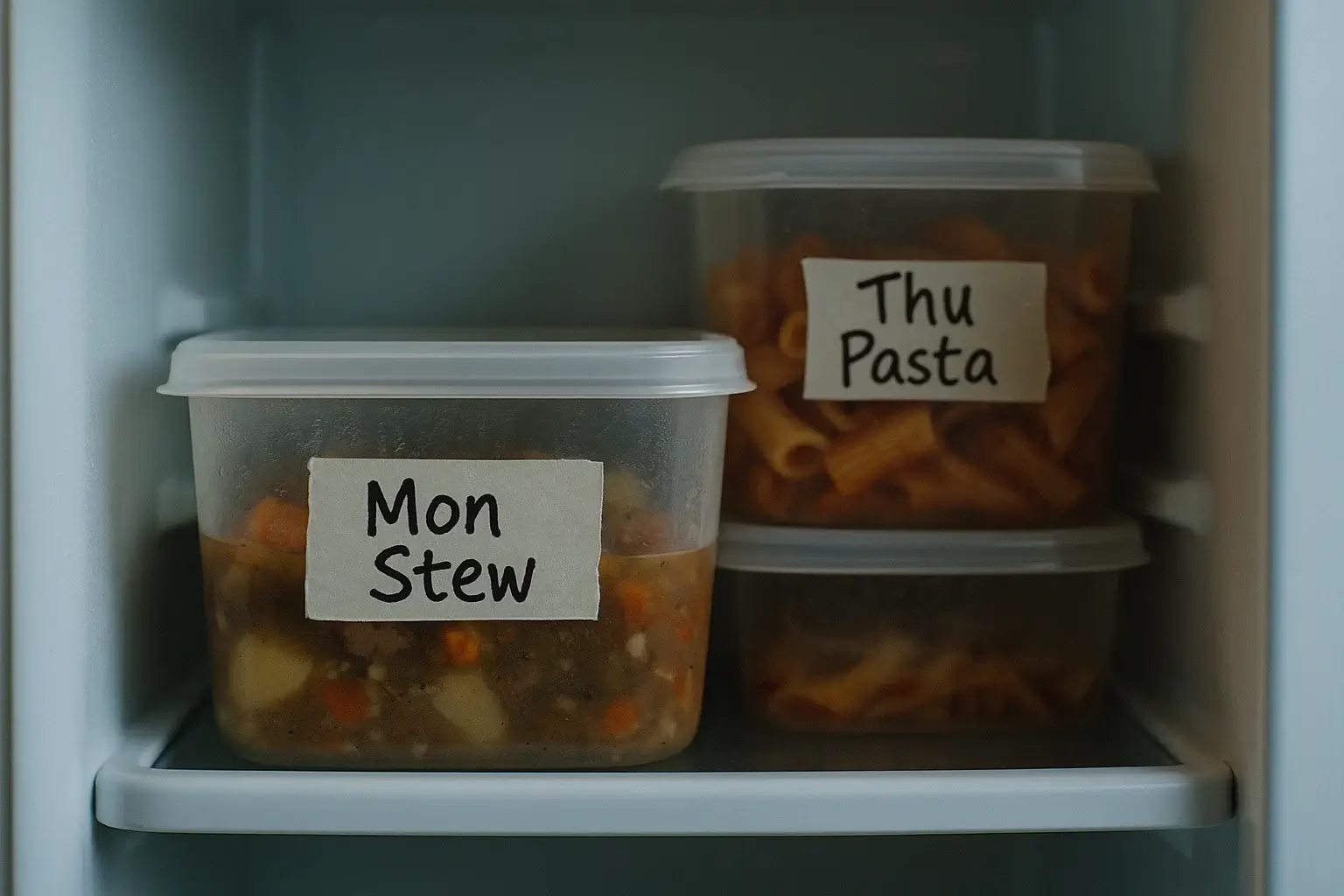
Fridge shelf with labeled containers arranged first-in first-out.

Plan & shop

📝
List it. Plan meals around what you already have. Buy for the servings you’ll actually cook.
📦
First in, first out. Rotate pantry & fridge; put older items in front.
🏷️
Date labels. “Use by” is safety; “Best before” is quality. Trust senses, not panic.
Containers, date stickers, vacuum bags, herbs stored in water.

Store smart

❄️
Freeze portions. Label dates; cool leftovers quickly and freeze flat.
🥶
Zones matter. Keep fridge 0–5°C; seal leafy greens; store herbs in a jar with water.
🧴
Containers. Clear boxes help you see & use food before it spoils.
Notebook with formula converting portions to yearly kilograms and euros saved.

Cook & portion

⚖️
Scale recipes. In RecipeGen, set servings realistically; avoid huge batches you won’t eat.
🥘
One-pot wins. Soups, stews, frittatas rescue odd veggies & scraps.
🍝
Leftover-first meals. Start dinner by checking last night’s fridge row.
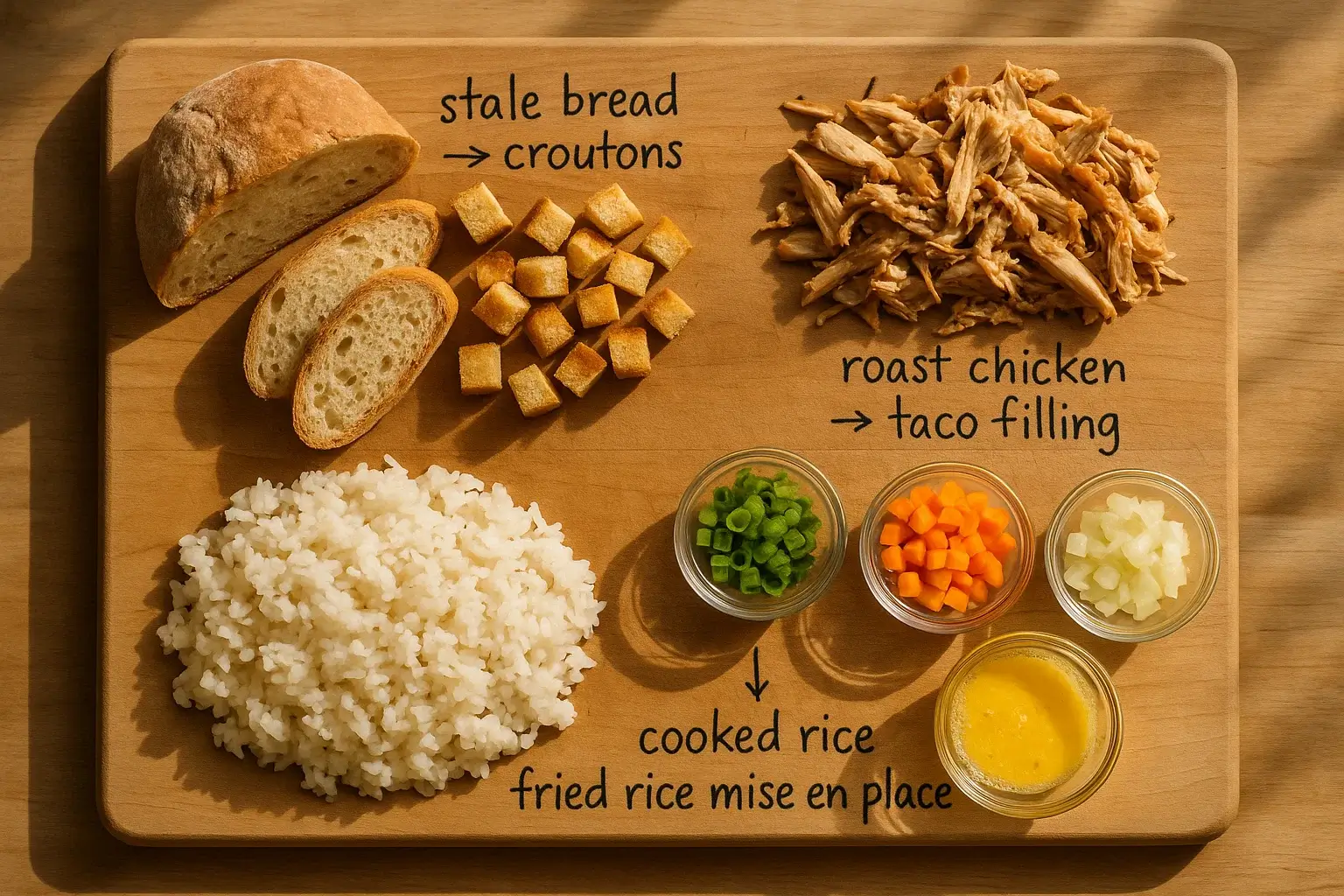
Stale bread converted into croutons, leftover proteins repurposed.

Leftovers ideas

🍚
Rice → fried rice. Add eggs/veg; reheat thoroughly.
🍗
Roast chicken → tacos/salad. Shred with spices, add fresh toppings.
🍞
Stale bread → croutons/crumbs. Oven-dry; store airtight.

How RecipeGen reduces waste

  • Portion scaling: set servings before you cook to match your household.
  • Smart substitutions: swap ingredients you don’t have for ones in your fridge.
  • Use-it-up suggestions: generate ideas based on what’s left.
  • PDF clarity: clear storage & reheating notes help you use leftovers safely.
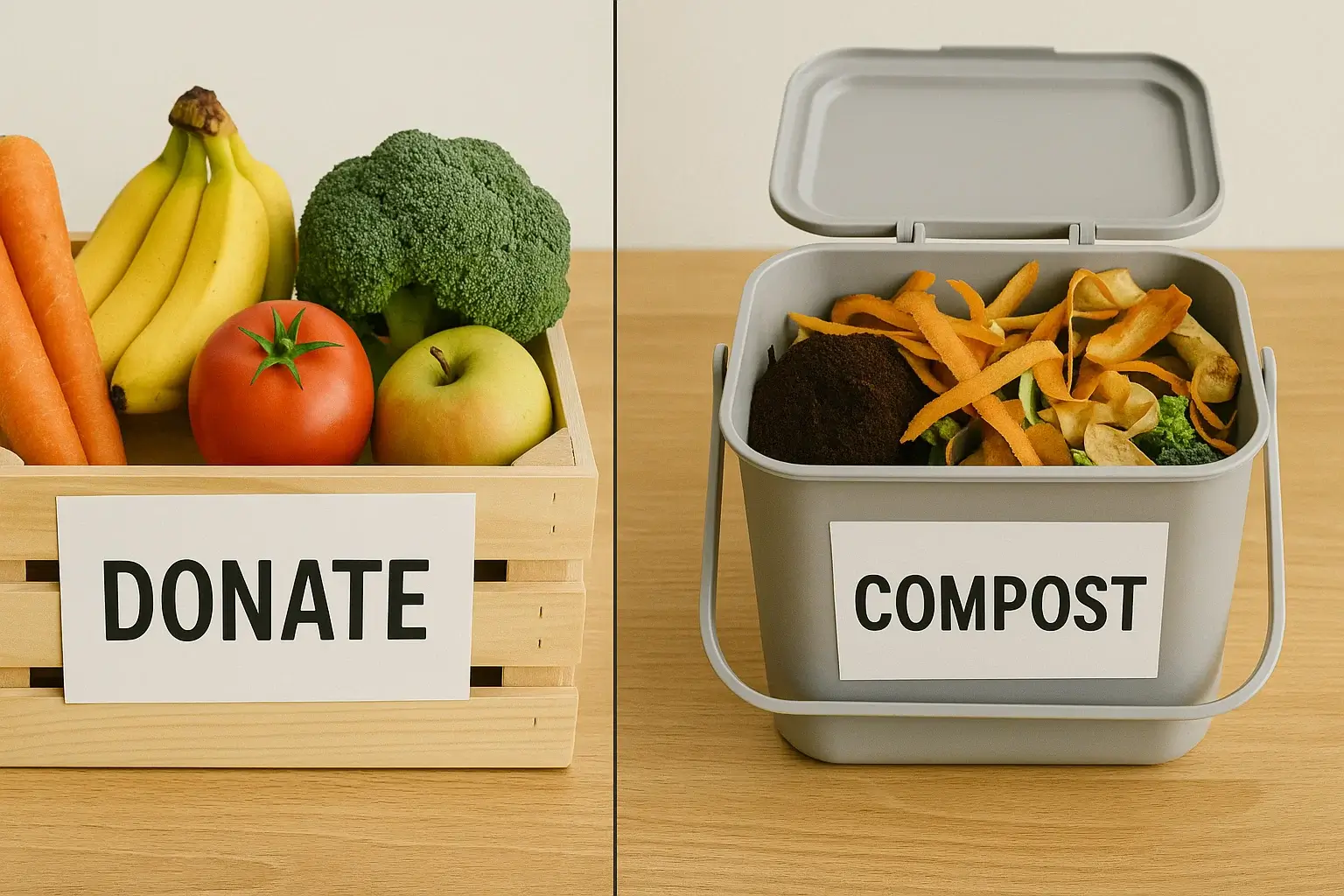
Crate labeled donate and kitchen compost caddy filled with peels and coffee grounds.

FAQ

Sources & further reading

Eurostat — EU food waste statistics (EU-27, 2022): ~132 kg/person total; households ~72 kg (~54%).
UNEP — Food Waste Index Report 2024: global & national estimates, methodology.
Malefors et al., 2025 (ScienceDirect): indicative carbon footprint ≈ ~1.3 kg CO₂e/kg; category differences are large.
Liu et al., 2023 (MDPI Foods): household food-waste carbon footprints by category and region; wide variability.

Turn leftovers into your next meal

Scale servings, swap smart, and keep a tidy fridge. RecipeGen can help at each step.

Open generator